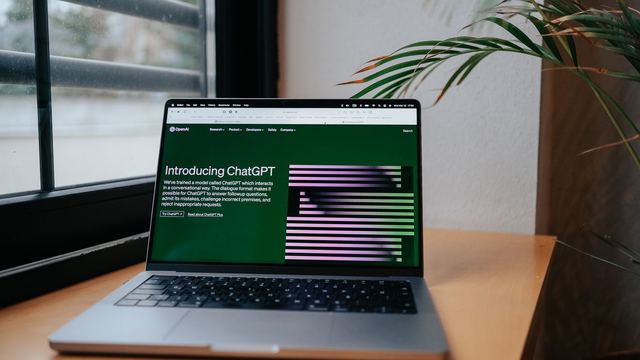
On its earnings call, Cloudflare said it now tells OpenAI when pages change, and that OpenAI pays for it. We are moving this site onto Cloudflare this week, so we had to choose our own AI Crawl Control settings.
A small Node.js script that reads the official and trade SEO news feeds every morning, scores each story by what matters to site owners, groups duplicates, and writes a short brief. A cut-down version of the one that runs this site.
Our first morning brief had 28 stories. We wrote about two. Here is the whole process: what the AI does, what it is never allowed to do with our content, and the checks every post passes before it goes live.
Mostly, yes: GA4 shows it as referral traffic from chatgpt.com. But some AI visits hide as direct traffic, and clicks from Google's own AI Overviews can't be separated at all. How to see what you can, in five minutes.
Our keyword tool's content gap analysis listed 67 competitor gaps to fill. 45 already had a live page on our site, and 13 were "near me" searches we could never win. Here is how to check a gap list before you write a word.
The design standard we hold every apartment website to: big bright photos of the real building, pages written only for renters, plain layouts that look like a real community site, and an inventory of every review and asset before the old site goes dark.
In the week before this website's launch, its fonts silently failed, every hovered link quietly returned a 404, and a phone page was twice as wide as the screen. Here is the checklist that caught them, and how to run it on any site.
Same SEO process, same week, three Seattle apartment buildings. Five weeks later one site had six times the search impressions and another barely moved. The Search Console data, and the three differences we think explain the gap.
Search Console clicks reportedly spiked 2x to 6.5x around Nov. 2 with flat impressions, and the pattern looks like bots. We checked the Search Console data for every site we manage. None of them match.
A short, standard-library Python script that pulls the Google Search Console API and compares this week with last week, site-wide and page by page. Plus an API trap we hit on four sites: grouping by page with a country filter dropped 37% to 87% of clicks.
No, Google doesn't penalize content for being written with AI. Its spam policy targets pages made in bulk with no added value, however they were produced. Here is where the line is, in Google's own words, and what we've seen on our own sites.
Yes, but not the way most people think. Images don't push a page up the normal rankings. Their SEO value is in Google Discover and image search, and only certain kinds help.
A website redesign and a round of content rewrites, then the same 40 pages lost more than half their ranking. An SEO case study in progress: the Search Console data, what we ruled out, and the menu-link test we're running now.
For keyword research, we ranked keywords by how often Google Autocomplete suggested them. Then we checked real search volume. The biggest keywords were at the bottom. Here's the data and what Autocomplete is actually good for.
SEO audit tools report problems that don't exist and miss problems that do. Four real cases from client audits: phantom alt text errors, contrast checks that only see one screen, and more.
Elementor changes not showing up after editing pages through the REST API, WP-CLI or an AI agent? Three problems fail with no error: server cache, missing CSS files and stripped iframes. Here's how to catch each one.
AppFolio blocks any request whose User-Agent contains the word WordPress, which is WordPress's default. How we found it, the test results, and the one-line fix.